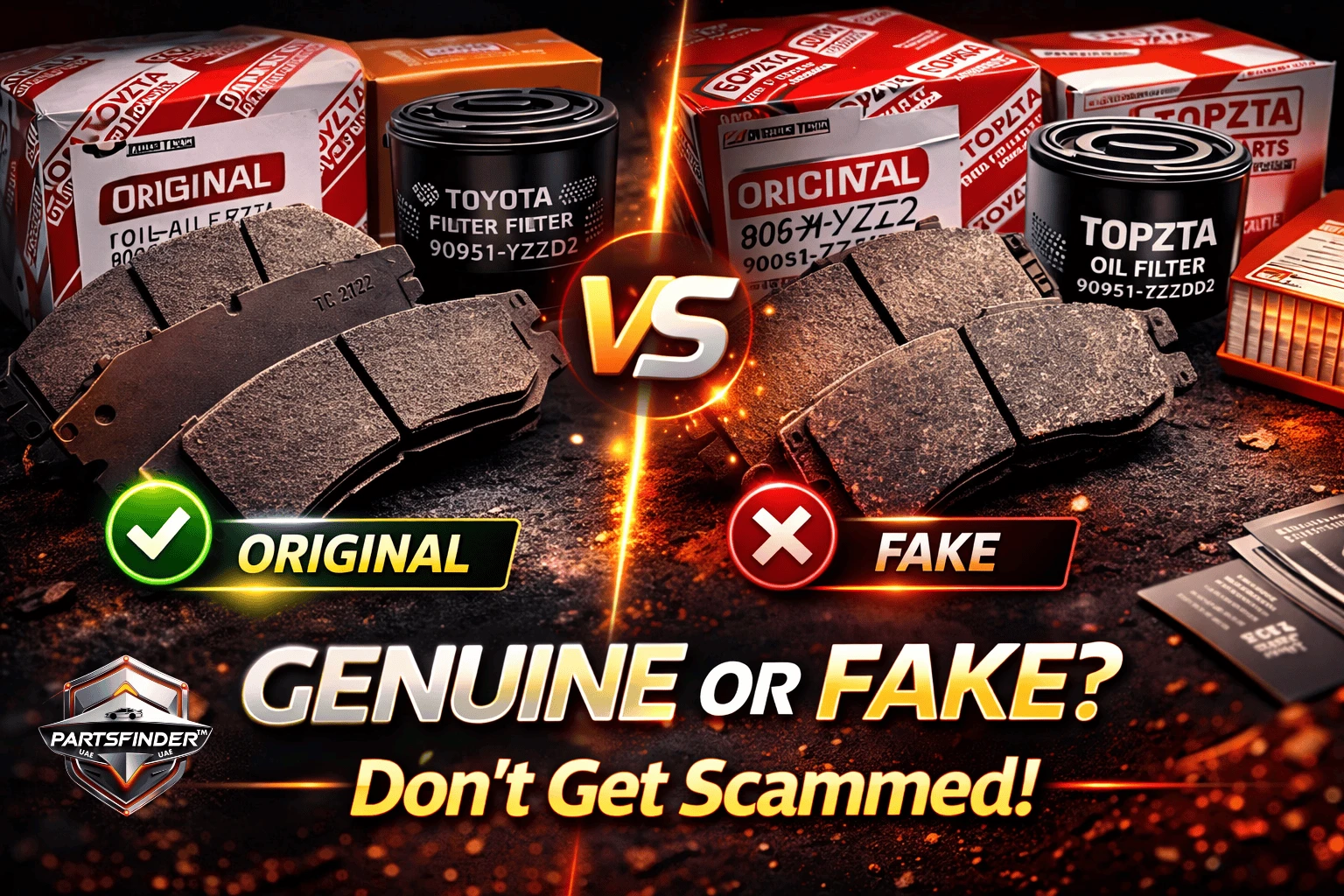
Buying car parts has grown somewhat dicey these days, with so many sellers online and offline that you cannot be sure every time whether you get a real manufacturer-approved part or some cheap imitation that looks quite like it but does not perform anywhere close. Just ask any mechanic: fake parts are much more common than you think, and they can cause anything from small annoyances to serious mechanical failures.
Here are some basic checks you can do before buying any part to avoid wasting money or damaging your car unintentionally.
1. Look at the Packaging — It Tells You More Than You Think
Real car parts are typically well-packaged, neat but not fancy. Often, counterfeits give themselves away here.
Things worth checking:
Print should be sharp and clean.
The logo should perfectly match the brand.
No spelling errors.
Box should be solid and not flimsy.
Part numbers on the box and product must match.
If the label and packaging look like they are printed by someone who is in a rush, or if the colors look "off", then it is probably not genuine.
2. Always Verify the Part Number
Every good manufacturer has a part number. It’s the easiest way to confirm you’re buying the right thing.
You can:
Compare this with the number in your car's owner manual.
Search for it on the official website of the brand.
Please ask the seller to provide an exact number.
And if a seller dodges giving you that number or says "all models are the same", then that's pretty much your cue to walk away.
3. Stick to Trusted Sellers
Where you buy matters—a lot. Some places are known for original parts, while others… not so much.
Better options include:
Authorized dealerships
Well-known auto parts retailers
Reputable online retailers
Sellers who give full documentation
It is not genuine if the shop looks unprofessional or the seller is offering "original OEM" at half the market price.
4. Check the Build Quality of the Part
You don't need to be a specialist to see that something is a poorly manufactured part.
Things to observe:
Weight - counterfeit parts often feel lighter
Surface finish: The original parts are much cleaner, more precise in appearance.
Markings - brands normally engrave or stamp their logo and numbers
Fitting points: the fitting points should be symmetrical and clean.
If it feels cheap in your hands, it'll behave cheaply in your car.
5. Check for Warranty or Return Promise
Real manufacturers are confident in their parts. They warranty them. The fakes almost never do.
Make sure the seller provides:
Warranty card or digital warranty
Receipt
Clear return policy
The seller hesitates or says “don’t worry, this is genuine”—without offering anything in writing—be careful.
6. Compare Prices but Do Not Run After the Lowest Price
While everyone loves to save money, auto parts that are too cheap are usually cheap for a reason.
When one seller is offering the same part for half of its normal price, something is wrong. Genuine parts almost never see such extreme price cuts unless it's some sort of official clearance.
7. Use Barcodes and QR Codes Where Available
Many genuine parts now carry quick response codes or barcodes you can scan. They usually take you to the manufacturer's verification page.
If:
The code doesn't scan
That's a suspicious-looking link.
The serial number is wrong.
…it’s better not to risk it.
8. Request an Appropriate Invoice
An authentic vendor will always give a bill. Duplicate parts are usually sold without one.
An invoice helps you with:
Warranty claims
Returns
Future service records