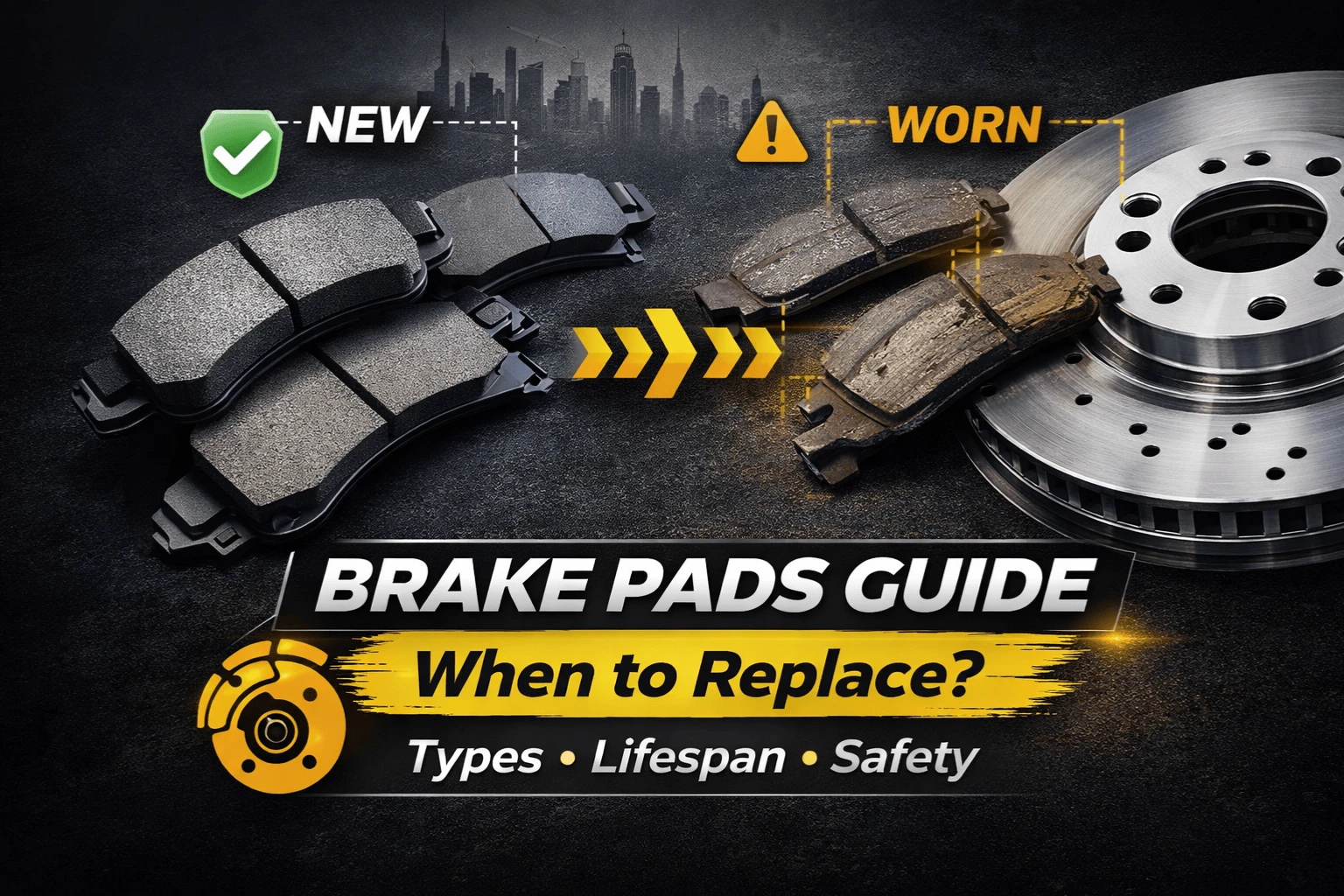
Your car’s brake pads are critical for stopping safely, especially in the UAE’s high-temperature climate and fast-paced traffic. They come in ceramic, semi-metallic, and organic types, each with different lifespans, performance traits, and price points. Most last between 30,000 and 70,000 km, but driving habits and conditions affect longevity. Knowing when to replace them and choosing the right type can prevent costly repairs and keep you and your passengers safe.
Introduction
In the UAE, where summer temperatures regularly exceed 45°C and highways like Sheikh Zayed Road see heavy, high-speed traffic, reliable brakes aren’t just important they’re essential. Yet many drivers only think about their brake pads when they hear a screech or feel a shudder underfoot. By then, it might be too late.
Brake pads wear down over time, and replacing them at the right moment is one of the most crucial aspects of car safety. But with so many options ceramic vs metallic, budget vs premium, OEM vs aftermarket it’s hard to know what’s best for your vehicle and driving style. This guide cuts through the noise. We’ll cover everything from how brake pads work to how much they cost in the UAE, what signs to watch for, and where to get trustworthy replacements.
Table of Contents
- What Are Brake Pads and How Do They Work?
- The 3 Main Types of Brake Pads Explained
- Ceramic vs Metallic Brake Pads: Key Differences
- How Long Do Brake Pads Last in the UAE?
- Signs Your Brake Pads Need Replacing
- When to Replace Brake Pads: Thickness Guidelines
- Brake Pad Replacement Cost in the UAE
- Best Brake Pads for Cars in the UAE: What to Consider
- Common Brake System Mistakes Drivers Make
- Where to Buy Genuine Brake Pads in the UAE
- Maintaining Your Braking System for Longevity
- Frequently Asked Questions (FAQ)
Key Takeaways
- Brake pads are a wear-and-replace component vital for vehicle safety never ignore early warning signs.
- Ceramic pads offer quiet operation and low dust; semi-metallic pads provide better heat resistance and durability in UAE conditions.
- Most brake pads should be replaced at 3mm thickness or less check during routine servicing.
- Replacement costs in the UAE range from AED 300 to AED 1,200 per axle, depending on brand and vehicle type.
- Always pair new brake pads with an inspection of rotors and callipers to avoid uneven wear.
- Buy from trusted suppliers to ensure genuine auto spare parts that meet OEM standards.
What Are Brake Pads and How Do They Work?
Brake pads are part of your car’s disc braking system. When you press the brake pedal, hydraulic pressure forces the brake calliper to squeeze the pads against the brake rotor (or disc), creating friction that slows and stops the vehicle. This process converts kinetic energy into heat, which must dissipate efficiently to maintain performance.
Over time, the friction material on the pad wears away. If not replaced, metal backing plates can grind against rotors, leading to expensive damage and reduced stopping power. In extreme cases, this can result in brake failure especially dangerous during sudden stops or on wet roads after rain, common in UAE cities like Dubai and Abu Dhabi.
The entire braking system includes:
- Brake pads
- Brake discs (rotors)
- Brake calipers
- Brake lines and fluid
- Master cylinder
All components must work together seamlessly. Neglecting any single part compromises safety.
The 3 Main Types of Brake Pads Explained
Not all brake pads are created equal. There are three primary types used in passenger vehicles:
1. Ceramic Brake Pads
Made from ceramic fibres, copper strands, and non-metallic fillers, these pads are known for smooth, quiet braking and minimal dust. They perform well in everyday driving and moderate climates.
Best For: Sedans, SUVs, luxury cars, city driving
Pros: Quiet, clean wheels, long-lasting under light use
Cons: Less effective in extreme heat or heavy braking; higher initial cost
2. Semi-Metallic Brake Pads
Composed of 30–70% metal (like steel, iron, copper), mixed with graphite and binding agents. These handle heat better and are more durable than ceramic or organic pads.
Best For: High-performance vehicles, off-roading, towing, hot UAE summers
Pros: Excellent heat dissipation, strong stopping power, affordable
Cons: Noisier, produces more brake dust, harder on rotors
3. Organic Brake Pads
Made from materials like rubber, glass, fibre, and Kevlar, held together by resin. Softer and quieter, but wear faster.
Best For: Light-duty city cars, eco-conscious drivers
Pros: Gentle on rotors, low noise
Cons: Wear quickly, poor heat resistance unsuitable for UAE conditions
Most modern vehicles in the UAE come factory-equipped with either semi-metallic or ceramic pads, depending on make and model.
Ceramic vs Metallic Brake Pads: Key Differences
| Feature | Ceramic Brake Pads | Semi-Metallic Brake Pads |
| Material Composition | Ceramicfibress + copper | Steel, iron, copper mix |
| Noise Level | Very low | Moderate to high |
| Dust Production | Minimal (light grey) | Higher (black dust) |
| Heat Resistance | Good | Excellent |
| Performance in the UAE Heat | Adequate for daily use | Superior in sustained braking |
| Rotor Wear | Low | Moderate to high |
| Lifespan | 50,000–70,000 km | 40,000–60,000 km (but varies by use) |
| Cost | Higher (AED 400–800 per axle) | Mid-range (AED 300–600 per axle) |
While ceramic pads keep your alloy wheels cleaner and offer a smoother ride, semi-metallic pads are often the smarter choice in the UAE due to their resilience in high temperatures and stop-and-go traffic.
How Long Do Brake Pads Last in the UAE?
On average, brake pads last between 30,000 and 70,000 kilometres, but several UAE-specific factors influence actual lifespan:
- High ambient temperatures: Reduce friction efficiency and accelerate wear.
- Aggressive driving: Sudden braking on highways shortens pad life.
- Dust and sand: Abrasive particles enter the braking system, increasing wear.
- Air conditioning use: Heavier engine load increases vehicle weight slightly, affecting braking stress.
City drivers in Dubai or Sharjah who face constant traffic may see pad wear as early as 30,000 km. Highway commuters with steady speeds may get closer to 60,000 km. Off-road enthusiasts or those towing trailers should expect even shorter intervals.
Regular inspections at least every 10,000 km are essential to catch wear early.
Signs Your Brake Pads Need Replacing
Ignoring these warning signs risks rotor damage and longer stopping distances:
- Squealing or Screeching Noise
Most modern pads have wear indicators a small metal tab that contacts the rotor when pads are thin, producing a high-pitched sound. - Grinding Sound
Metal-on-metal grinding means the pads are completely worn. Immediate replacement is needed to avoid rotor damage. - Vibration in the Steering Wheel
Often caused by warped rotors due to overheating or uneven pad wear. - Brake Warning Light On
Some vehicles have electronic sensors that alert you when the pad thickness drops below safe levels. - Increased Stopping Distance
If you notice you need more room to stop, your pads may be compromised. - Visible Thinness
Through the wheel spokes, you can often see the pad against the rotor. If it’s less than ¼ inch thick, it’s time to act.
Never delay replacement once symptoms appear. Safety should always come first.
When to Replace Brake Pads: Thickness Guidelines
Brake pad thickness is measured in millimetres. Here’s a simple rule:
- New pads: 10–12 mm
- Time to inspect closely: 5 mm
- Recommended replacement point: 3 mm
- Danger zone: Below 2 mm (risk of metal contact)
Even if your pads are at 4 mm, consider scheduling replacement soon especially before long trips or summer months. Waiting until you hear noise often means you’ve already damaged the rotors.
During oil changes or tyre rotations, ask your mechanic to check pad thickness. It takes seconds and prevents bigger issues later.
Brake Pad Replacement Cost in the UAE
Replacement costs vary based on vehicle type, brand, and garage. Here's a general breakdown:
| Vehicle Type | Pad Cost (Per Axle) | Labour (Front or Rear) | Total Estimate |
| Compact Car (e.g., Toyota Yaris) | AED 250–400 | AED 100–150 | AED 350–550 |
| SUV (e.g., Nissan X-Trail) | AED 400–600 | AED 150–200 | AED 550–800 |
| Luxury Vehicle (e.g., BMW 5 Series) | AED 600–900 | AED 200–300 | AED 800–1,200 |
Note: Prices are for genuine or high-quality aftermarket parts. Budget options may be cheaper,r but risk premature wear or noise.
Dealerships typically charge more than independent garages, but they often use OEM parts. Always ask for a breakdown of parts and labour.
Some workshops offer free brake checks take advantage of these to stay informed.
Best Brake Pads for Cars in the UAE: What to Consider
Choosing the right brake pads depends on your driving habits and environment:
Factors to Evaluate:
- Driving Conditions: City traffic demands frequent braking; opt for durable semi-metallic.
- Vehicle Type: Heavy SUVs generate more heat choose high-friction compounds.
- Climate: Extreme heat favours pads with superior thermal stability.
- Budget vs. Long-Term Value: Cheaper pads may save money now, but cost more in rotor replacements later.
- OEM Compatibility: Match pads to your manufacturer’s specifications.
Top Brands Available in the UAE:
- Bosch Reliable performance, widely available
- Akebono Premium Japanese brand, excellent for comfort and control
- Ferodo Trusted UK brand with strong semi-metallic options
- Textar German engineering, used by many OEMs
- Brembo High-performance, ideal for sports cars or aggressive drivers
For most UAE drivers, semi-metallic pads from Bosch or Textar offer the best balance of durability, safety, and value.
Common Brake System Mistakes Drivers Make
Avoid these errors that compromise safety and increase repair bills:
- Delaying replacement until noise appears → Already causing rotor wear
- Replacing only front pads → Uneven braking force; rear pads will fail sooner
- Using low-quality or counterfeit pads → Poor stopping power, excessive dust
- Skipping rotor inspection → Worn or warped rotors reduce new pad effectiveness
- DIY installation without proper tools → Risk of improper alignment or air in brake lines
Always go to a certified technician. Brakes are not a place to cut corners.
Where to Buy Genuine Brake Pads in the UAE
You can buy brake pads from dealerships, auto shops, or online. However, quality varies significantly.
Reputable physical stores include:
- Midas UAE
- Kwik Fit UAE
- Bosch Car Service Centres
- Authorised brand outlets in Dubai Auto Zone
Online platforms offer convenience and competitive pricing. One trusted source for verified auto spare parts in the UAE is PartsFinder.ae, which provides genuine components matched to your vehicle’s make and model, with delivery across Dubai, Abu Dhabi, Sharjah, and beyond.
When buying online:
- Verify compatibility using your VIN or license plate
- Check seller ratings and return policy
- Look for authenticity seals or warranty cards
Avoid suspiciously cheap offers counterfeit brake pads are a real problem in some markets
Maintaining Your Braking System for Longevity
Extend the life of your brake pads and rotors with smart driving and maintenance:
- Practice progressive braking: Slow down gradually instead of slamming the brakes.
- Use engine braking on downhill slopes: Reduces strain on pads.
- Keep wheels clean: Remove brake dust buildup regularly.
- Check brake fluid annually: Low or contaminated fluid affects performance.
- Rotate tyres regularly: Improves overall handling and reduces uneven brake wear.
Schedule a full brake system inspection at least once a year even if no symptoms appear. Prevention is far cheaper than repair.
Having worked with hundreds of vehicles across the UAE, we’ve seen firsthand how environmental stress impacts braking systems. Sand ingress, combined with high-speed braking on desert roads, accelerates wear in ways not seen in milder climates.
Many drivers assume “if it’s not squeaking, it’s fine”but by the time noise starts, up to 30% of rotor material may already be lost. Regular visual checks and thickness measurements are the only reliable way to stay ahead of failure. Trust only technicians who inspect both pads and rotors, and never install mismatched components.
FAQ Section
1. How often should I replace brake pads in the UAE?
Every 30,000 to 70,000 km, depending on driving style and conditions. Inspect them every 10,000 km, especially in dusty or high-heat environments.
2. Are ceramic brake pads better than metallic?
Ceramic pads are quieter and cleaner but less heat-resistant. For UAE conditions, semi-metallic pads often perform better under sustained braking.
3. Can I replace brake pads myself?
It’s possible with the right tools and knowledge, but improper installation can lead to brake failure. Unless experienced, leave it to professionals.
4. What happens if I don’t replace worn brake pads?
You risk damaging rotors, increasing stopping distance, and potentially losing braking power especially dangerous in emergencies.
5. Where can I buy reliable brake pads in the UAE?
Authorised service centres, reputable auto shops, or trusted online suppliers like PartsFinder.ae offer genuine auto spare parts in the UAE with proper fitment guarantees.
6. Do front and rear brake pads wear at the same rate?
No. Front pads wear faster because they handle up to 70% of the braking force. Always replace the axles (front or rear set) to maintain balance.
Conclusion
Your car’s brake pads are more than just a maintenance item they’re a front-line defence for your safety. In the UAE’s demanding climate, choosing the right type, recognising wear early, and replacing them promptly can mean the difference between a close call and a collision. Whether you drive a compact sedan or a heavy SUV, understanding your braking system empowers you to make smarter, safer decisions.
Now that you know the signs, types, costs, and best practices, take action. Check your brake pad thickness, compare quality options, and choose a trusted provider. For genuine, vehicle-matched auto spare parts in the UAE, visit PartsFinder.ae to find the right brake pads for your car delivered fast and backed by quality assurance. Stay safe, stay aware, and keep your stops sharp.